slovensko | site map
HOME ABOUT US ACTIVITIES SERVICES CONTACTS
news
Latest news
Energy efficiency and sustainability-based building and civil engineering - a workshop held at ZAG on August 29th, 2012
Workshop on X-Ray Computed Microtomography, ZAG - 5th floor, February 24, 2012
EMABM 2011-13th Euroseminar on Microscopy Applied to Building Materials
Visit of the Canadian ambassador
ARCHES and SPENS final seminar - photos, presentations and videos available
Bojan Leben elected as new FEHRL Executive Committee Chairman
Invitation to public application of the new generation of UHPFRC
TYROSAFE Youtube Video Competition 2009 Launched
CERTAIN Slovenian National Workshop: R&D projects in the field of road transport in need for more financial support from the state
ZAG hosts kick-off meeting for the YEAR 2010 project
CHRESP - 8th European Commission Conference on Sustaining Europe's Cultural Heritage to open on Monday
SURF 2008 finishes successfully
ZAG Ljubljana to organize the 6th symposium on pavement surface characteristics
Transport Research Arena 2008 opens today
Mutual Strategy Agreement with Hidria
Research projects on exhibition at Ljubljana's Town Hall
Rearch project presented to European Parliament representatives
ZAG Ljubljana participates at 87th Annual Meeting of TRB and at SHRP 2 symposium in Washington
Danish expert on assessment and monitoring of bridge structures at ZAG
Traffic experts visit ZAG
ENBRI meeting in Ljubljana
ZAG visited by CLEANTILE partners
ZAG meets requirements of ISO 9001 : 2000 Certificate for Quality Management
ZAG Ljubljana is taking over coordination of the EU financed project CERTAIN
NANOCEN - Marie Curie Fellowships
ZAG - notified body at the EU Commission
   

Energy efficiency and sustainability-based building and civil engineering - a workshop held at ZAG on August 29th, 2012

At the workshop "Energy efficiency and sustainability-based building and civil engineering" the most recent achievements, as well as the present state, in Slovenia, of sustainability-based building and civil engineering were presented, together with an overview of the new directions of development and opportunities in this field. Introductory speeches were made by ZAG's director, Professor Dr Andraž Legat, and Slovenia's Minister for Education, Science, Culture and Sport, Professor Dr Žiga Turk. Numerous participants, some from countries outside Slovenia, were welcomed to the event, within whose framework three significant projects which are currently progressing in the field of sustainability-based building and civil engineering: "Building Up", "ReBirth" and "TIGR", were presented.

At the workshop ZAG's Director, Dr Andraž Legat said that, although the Slovenian economy, and in particular its building and civil engineering sector, had been severely hit in recent years by the Credit Crunch, there are still several important possibilities for the promotion of this branch of industry, especially in the field of the improvement of the energy efficiency of buildings. In Legat's opinion the technological level of Slovenia's construction industry is still satisfactory, whereas there are difficulties in the implementation of the results of research work in practice. He also discussed the question of "the very big drop in the building and civil engineering sector", but added that the participants to the workshop would be able to learn more about recent achievements in this field and about sustainability-based building and civil engineering. They would also be able to find out about new directions of development and opportunities in this field.

In his speech at the workshop, Slovenia's Minister for Education, Science, Culture and Sport, Žiga Turk emphasized that those branches of the economy which had in the past been less exposed to international competition were now being forced to become more competitive. Those sectors which had not been subject to such effects had been left behind by their competitors, said Turk, and among these sectors was the building and civil engineering industry. "In fact only a small proportion of projects and thus only a small fraction of the earnings of Slovenia's building and civil engineering sector arose in fair and open competition on international markets" said Turk, according to whom this sector is too important a sector for the country to neglect, but that there must also be sufficient interest among individual firms. "Construction firms should show interest in doing more than just working for the public sector here in Slovenia", he added. Turk sees opportunities for the re-starting of Slovenia's building and civil engineering industry particularly in the field of the upgrading of the energy efficiency of public buildings. "One of the main investments in this field is energy upgrading" emphasized the minister. He also said that one part of Slovenia's building and civil engineering industry, i.e. mainly its research and development part, is already competitive, and that in the future it will be worth investing mostly in international competitive building projects. Within the scope of the workshop several projects were presented in the field of sustainability-based building and civil engineering, including the Competency Centre "Sustainability-Based and Innovative Building and Civil Engineering", which is concerned with the challenges involved in the reduction of greenhouse gasses. The building industry and buildings themselves are in fact the source of approximately 40 percent of greenhouse gas emissions in Europe. This industry also produces about one third of all waste and uses about 20 % of all water.

The Minister's speech was followed by presentations of three more important projects in the field of sustainability-based building and civil engineering.

The "Building Up Project" - Long term view and roadmapping actions in energy efficiency in building, was presented by Dr Jadwiga Fangrat. The strategic aim of this project within the 7th Framework Program is the preparation of guidelines for a policy of cooperation between the public and private sectors in the field of the energy efficiency of buildings. On the basis of an overview of performed and on-going research and innovations it would be necessary to establish coordinated European technological platforms and to prepare actions for the promotion of energy efficiency. Emphasis needs to be laid on sustainability-based solutions and the elimination of non-technological barriers.

The ReBirth project was presented in the form of a contribution entitled "The use of waste in building and civil engineering – can we recognize it and how can we manage it?". The presentation was made by Dr Alenka Mauko, Janja Leban, Mirko Šprinzer and Zvonko Cotič. The main aim of the LIFE + project ReBirth (Promotion of the Recycling of Industrial and Building Waste and their use in Building and Civil engineering) is the increasing and improvement of recycling of industrial and building waste for use in the building and civil engineering industry by making people more aware of the possibilities for recycling at the national, regional and local level. The aim of the project is to present examples of good practice and to demonstrate the latest technologies, tools, and information, which are needed in order to achieve a significant increase in the degree of recycling and use of building and industrial waste.

Under the title "The potential of sustainability-based building and civil engineering (the TIGR project)" Friderik Knez presented the Competence Centre: "Sustainability-based and Innovative Building and Civil Engineering – TIGR", which is concerned with the greatest challenges of how to reduce the emission of greenhouse gasses. Building and civil engineering and buildings themselves result in about 40% of all such emissions in Europe. 40% of energy and 40 % of used materials can be attributed to the construction industry. The construction sector produces one third of all waste and accounts for almost 20% of the total consumption of water. All these emissions must be reduced, in such a way that Slovenia will not only be relieved of part of the corresponding burden, but that there will also be at least a partial restart in the construction sector. Since a lot of different complex aspects are involved in the construction of buildings and other structures, a lot of knowledge is needed, as well as widely-embracing views. That is exactly what the TIGR project is able to provide through research into energy efficiency and renewable sources of energy, greenhouse gas emissions, the promotion of recycling, advanced ICT and a number of new sustainable products.

This presentation was followed by a discussion about the present state of Slovenia's construction industry and its outlook. This session was moderated by Tanja Mohorič from Hidria. A brief presentation was then made by Jože Renar from Slovenia's Chamber of Commerce and Industry, who gave his views in a paper entitled "The state of Slovenia's construction industry", and by Dr Andraž Legat from ZAG, who described "Measures to be undertaken by the EC for the technological development of building and civil engineering". A short discussion followed.

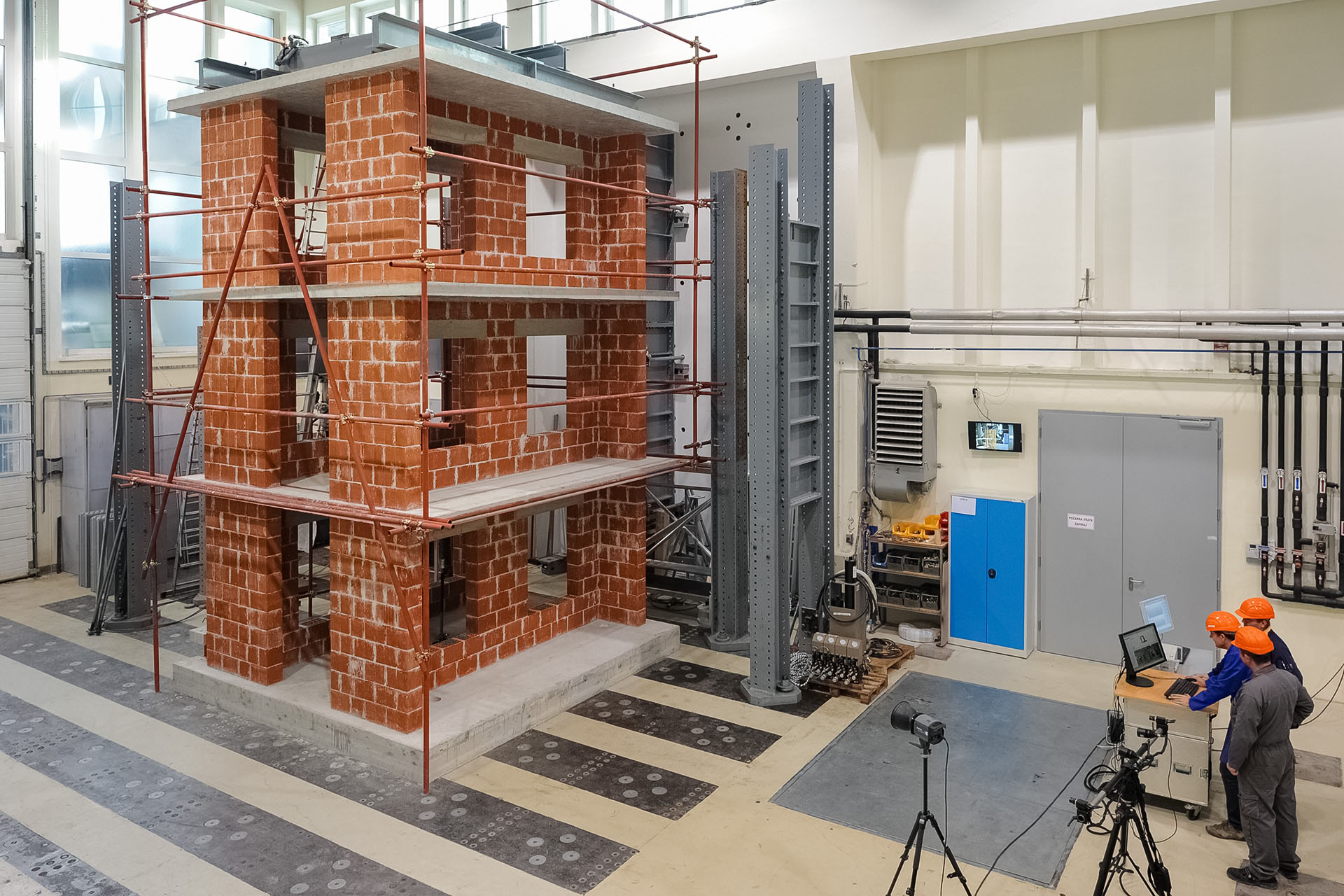
At the end of the workshop participants viewed with interest a demonstration structure within the framework of the project Cost-Effective (Resource- and Cost-Effective integration of Renewables in Existing High-Rise Buildings) from the 7th Framework Program. An explanation about this building was given by Sabina Jordan. Erika Švara and Dr Jaka Kovač then demonstrated the operation of various microscopes, and Lidija Korat showed visitors ZAG's new microtomograph.


                  Slovenia's Minister for Education, Science, Culture and Sport, Professor Dr Žiga Turk


ZAG's director, Professor Dr Andraž Legat and Minister for Education, Science, Culture and Sport, Professor Dr Žiga Turk


Tanja Mohorič, Hidria


Dr. Jadwiga Fangrat, ITB


Janja Leban, GZS


Tanja Mohorič, Hidria


mag. Jože Renar, GZS
 
Buy sildenafil citrate online | Buy levaquin 500mg 750mg online | Buy sildenafil citrate online